

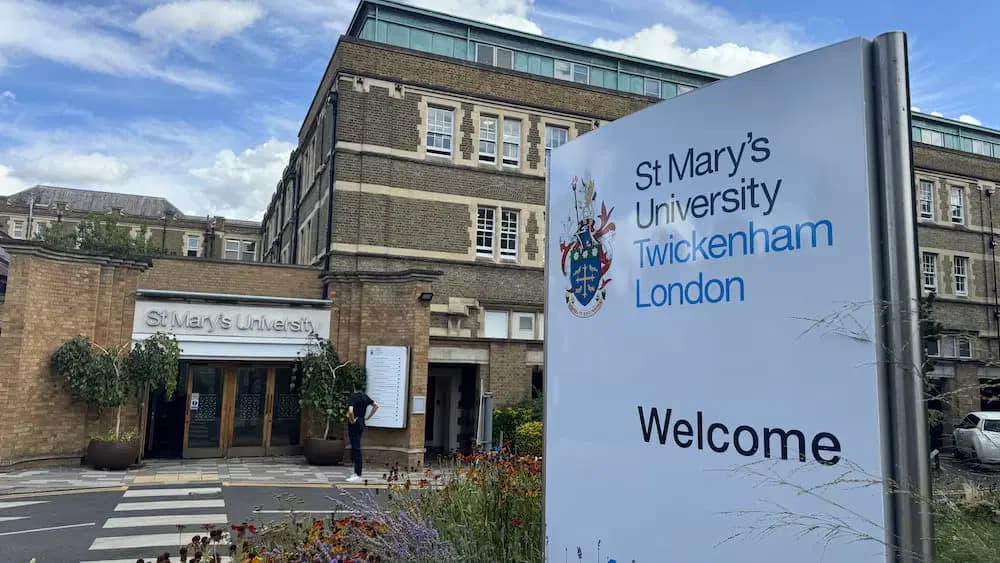
St Mary's University is undertaking a phased upgrade of its emergency lighting infrastructure across the campus estate.
Historically, the University operated a mixture of self-contained systems and monitoring platforms. This created inconsistency in compliance reporting, testing procedures and lifecycle management.
We were engaged to design and supply a standardised smart self-contained emergency lighting solution capable of supporting the full campus including student accommodation, lecture theatres and listed buildings.
The project remains ongoing, with 741 smart luminaires deployed to date.
The Problem
The University faced several operational challenges:
- Mixed emergency lighting systems across campus
- Inconsistent compliance reporting
- Manual visual inspection requirements
- Difficult access to dormitories and lecture spaces
- Listed building constraints limiting new containment
- Requirement for future scalability
In student accommodation and teaching environments, physical access for routine inspection and testing is disruptive and often restricted.
A cabled monitoring system would have introduced additional infrastructure, cost and installation complexity, particularly within heritage buildings.
The University required a unified, centrally managed solution that reduced manual intervention while improving compliance visibility.
The Solution
To date
- 741 Wireless Professional smart luminaires supplied
- Phased commissioning across multiple campus buildings
- Central control software installed and configured
- Floor plans uploaded and luminaires mapped
- Automatic test schedules programmed
- Email fault notifications configured
The system provides
- Remote function testing
- Remote duration testing
- Automated battery capacity tests (typically 3-hour)
- Real-time status visibility
- Centralised compliance log storage
Testing no longer requires physical access to every luminaire.
Our Approach
Campus standardisation
We specified RP-Technik "Wireless Professional" smart emergency luminaires as the standard platform for the estate. This provides:
- Monitoring compliant with EN 62034 Type ER
- Expansion capability up to 1,000 luminaires per system
- Central software control and reporting
- Remote testing and monitoring functionality
The system is being rolled out in phases, replacing legacy equipment and bringing all buildings under a single monitoring platform.
Resilient mesh network
Each luminaire operates within a self-organising 868 MHz mesh network. Key advantages:
- 30 m guaranteed indoor range between luminaires
- Communication through reinforced concrete floors
- No single point of failure
- Automatic routing between devices
- No BUS-line infrastructure
The mesh architecture ensures resilience: if one device drops offline, communication is maintained through alternative paths.
From an installation perspective, each luminaire requires only a single-phase supply (L, N, PE). No signal cable. No data backbone.
This made the system particularly suitable for:
- Listed areas of the University
- Refurbishment works
- Phased building upgrades
- Minimising containment disruption
Maintenance and compliance
The move to wireless monitored luminaires significantly reduces manual inspection requirements. In environments such as:
- Student dormitories
- Lecture theatres
- Shared teaching spaces
Routine access for visual inspection can be time-consuming and disruptive. Remote monitoring allows estates teams to:
- Identify faults before attending site
- Target maintenance visits
- Access full compliance history digitally
- Reduce unnecessary call-outs
The University now operates a software-driven compliance platform rather than fragmented manual logbooks.
The Result
St Mary's University is progressively achieving full standardisation of emergency lighting monitoring across its estate.
Key outcomes to date
- 741 smart luminaires centrally monitored
- Unified monitoring platform replacing mixed legacy systems
- Remote testing capability across campus
- Reduced need for intrusive physical inspection
- No monitoring cabling infrastructure required
- Suitable for heritage and listed buildings
- Resilient mesh network architecture with no single point of failure
- Scalable for future campus expansion
The project demonstrates how a phased, wireless approach can modernise compliance management without the disruption associated with traditional cabled systems.
Project Highlights
- Ongoing campus-wide programme
- 741 wireless smart luminaires installed to date
- 868 MHz self-organising mesh network
- EN 62034 Type ER compliant monitoring
- Remote function and duration testing
- No BUS wiring required
- Live, neutral and earth installation only
- Suitable for listed buildings
- No single point of failure
- Expandable to 1,000 luminaires per system