

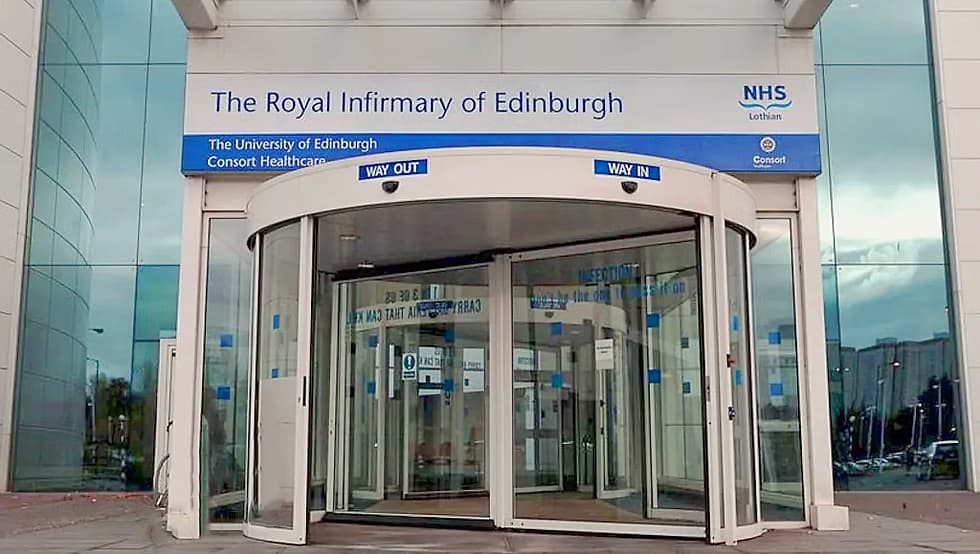
The Royal Infirmary of Edinburgh operates a high-dependency healthcare environment where life safety systems must remain compliant, resilient and fully documented.
We have supported the site's emergency power infrastructure for several years. Following a lifecycle review, the existing central emergency lighting unit was identified as end-of-life, with component obsolescence presenting increasing operational risk.
The end user required a technically justified replacement that maintained compliance with BS EN 50171, retained the original changeover philosophy and improved long-term serviceability.
The Problem
The existing 10 kVA central battery system had been in service since 2001 and was originally installed to provide 3-hour autonomy for maintained emergency lighting circuits.
Key risks included
- Ageing infrastructure with limited spares availability
- Increasing likelihood of unmanageable failure
- Maintained lighting circuits dependent on uninterrupted supply
- Requirement to maintain 3-hour autonomy
- Obligation to retain original design intent for certification purposes
Failure of a centralised maintained lighting system in an acute hospital environment carries both compliance and safety implications.
Replacement needed to be engineered carefully, not simply swapped.
The Solution
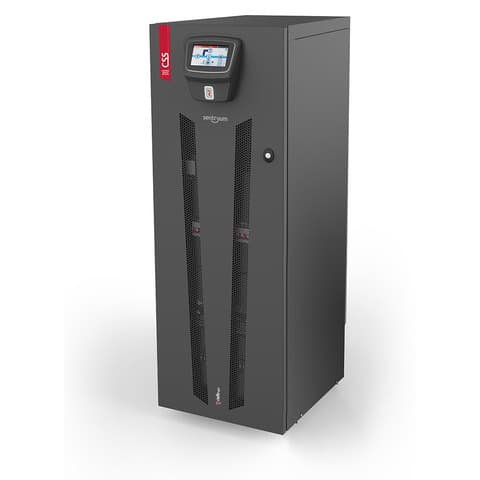
The installed system comprised:
- Riello CSS CBT Central Power Supply (EN 50171 compliant)
- 40 × 101 Ah battery blocks
- Cladded battery stand
- 63 A 4-pole changeover panel
- New H07 5-core cabling to replace non-compliant SY cable
Compliance-led design
We specified a Riello CSS CBT central power supply fully compliant with EN 50171.
The new installation was configured as a dual-supply centralised system in line with the original design philosophy.
We designed a cladded battery stand housing 40 × Fiamm 12FIT101 12 V 101 Ah batteries.
The configuration was calculated to provide 3-hour autonomy at end-of-battery life, ensuring compliance throughout the lifecycle.
Serviceability improvement
The site incorporates impedance testing as part of its servicing regime.
We introduced front-mounted battery connections, delivering:
- Safer access for engineers
- Reduced time onsite during maintenance
- No requirement to lean across battery rows
- Faster impedance testing
This materially reduces future maintenance burden in a live hospital environment.
Retention of changeover philosophy
A 63 A automatic changeover panel was installed to mirror the original construction design.
In the event of primary system failure, the load automatically transfers to the reserve supply, preserving certification integrity and maintaining compliance.
Maintenance & Downtime
The works were carried out within a live hospital environment under controlled planning.
Key measures
- Coordinated delivery and internal movement of equipment with the on-site logistics team
- Sequenced installation to minimise system exposure
- Controlled commissioning and verification prior to final energisation
Commissioning included
- Mains fail testing
- Inverter and bypass transfer verification
- Battery float voltage verification
- Polarity and insulation resistance testing
- Earth fault loop impedance checks
The system was left fully operational and supporting load.
The Result
The Royal Infirmary of Edinburgh now benefits from:
- A fully compliant BS EN 50171 central emergency lighting system
- Guaranteed three-hour autonomy at end-of-life battery conditions
- Improved maintenance efficiency and safer battery access
- Retention of original changeover philosophy for certification
- Full documented commissioning and compliance sign-off
The project removed the operational risk associated with obsolete equipment while improving long-term maintainability and lifecycle resilience.
Delivered within programme and without disruption to hospital operations.
Project Highlights
- EN 50171 compliant central power supply
- 40 × 101 Ah battery configuration
- Three-hour autonomy at end-of-life
- Front-mounted battery terminals for safer impedance testing
- 63 A automatic changeover panel
- Full mains fail and transfer testing completed
- BS 7671 certified installation
- Legacy system safely decommissioned
- Live acute healthcare environment delivery