

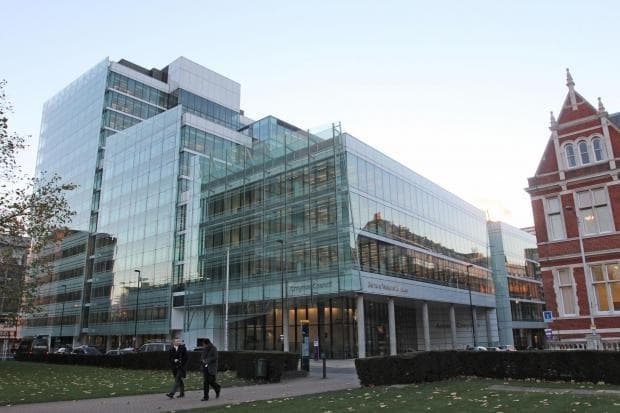
Bernard Weatherill House is the headquarters building for Croydon County Council, housing critical administrative and IT infrastructure.
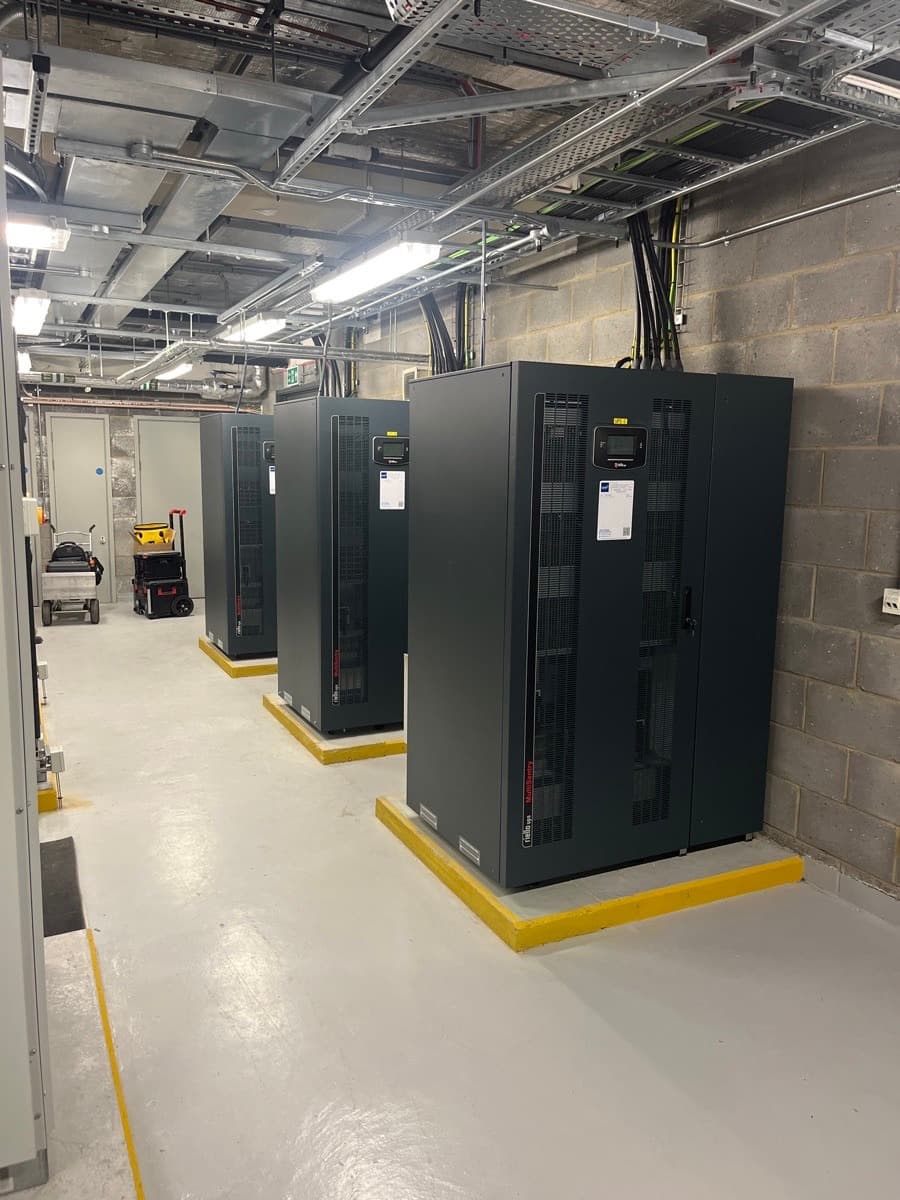
The site was operating three 200 kVA Vertiv UPS systems in parallel, integrated with a Castell interlock arrangement and an external maintenance bypass built into the main LV switchgear.
The systems had reached a stage where full overhaul was required, including replacement batteries, capacitors and cooling fans.
Rather than invest in major refurbishment of ageing infrastructure, OCS engaged us to review replacement options and provide a compliant, open-protocol alternative.
The Problem
Installation compromised
The existing installation comprised:
- 3 × 200 kVA UPS systems operating in parallel
- Castell key interlocking
- External maintenance bypass integrated within live LV switchgear
- Top cable entry configuration
- 2-pole DC battery isolation
The systems required
- Full battery replacement
- Capacitor replacement
- Fan replacement
- General overhaul
At this stage, lifecycle investment was substantial, with no long-term efficiency or monitoring improvements gained.
Key constraints
The building could not be fully powered down.
- The external maintenance bypass formed part of the main LV switchgear
- Existing AC cabling needed to be retained where possible
- Battery stands were to be reused
- Castell interlocking had to remain integrated
- All works undertaken within a live switchroom environment
Risk mitigation and sequencing were critical.
Our Approach
Option review
Following the site survey, we provided two engineered solutions:
- Like-for-like 3 × 200 kVA parallel replacement
- Modular N+1 solution with future scalability
Although the modular solution provided long-term flexibility and reduced upfront expenditure, the client elected to proceed with the like-for-like replacement.
The decision was commercially and operationally driven:
- Maintain the established parallel architecture
- Retain Castell key interlocking philosophy
- Avoid redesign of LV switchgear integration
- Minimise operational change risk
- Preserve maintenance familiarity
Engineering challenges
Cable entry
The existing UPS systems were top-entry; the replacements were bottom-entry as standard. A top-entry conversion kit was installed to retain existing AC cabling and avoid unnecessary rework.
Battery interface
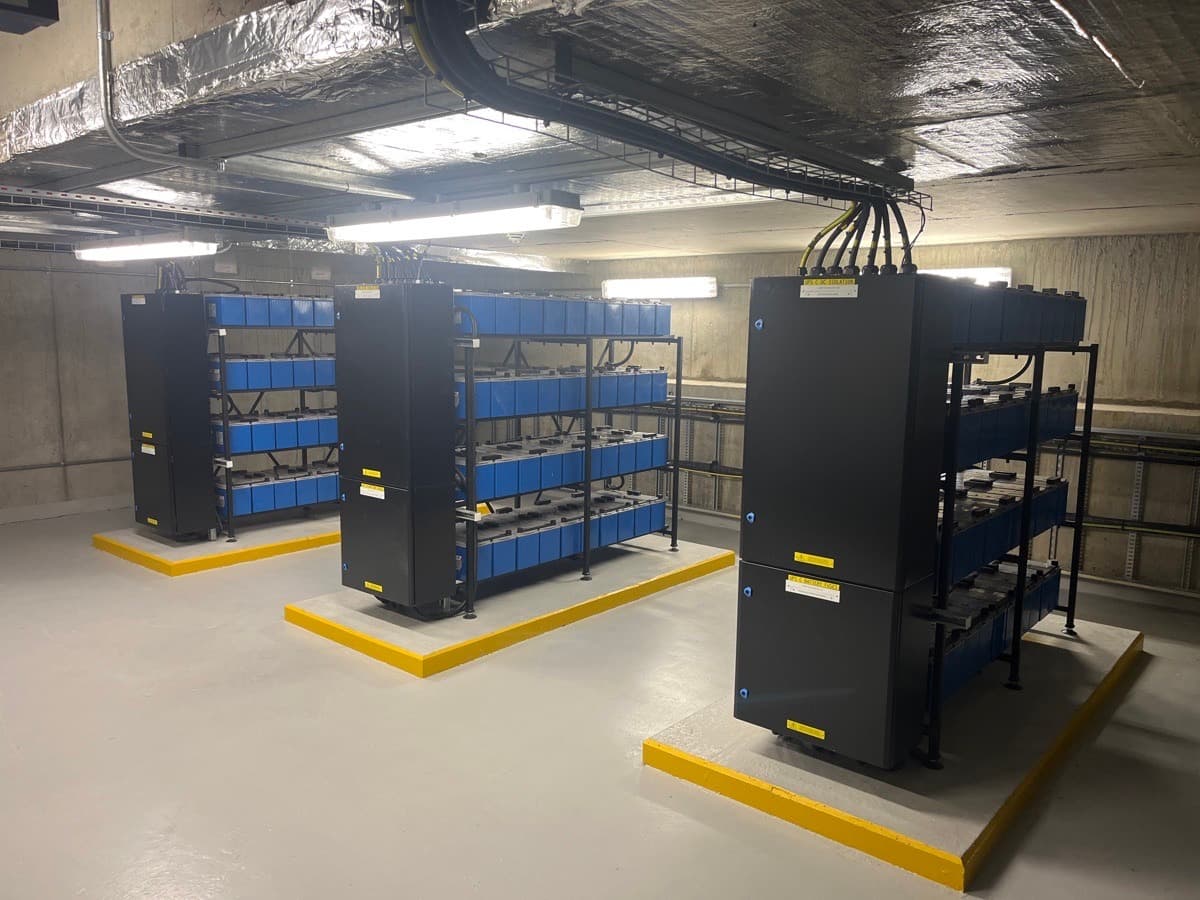
The legacy system used 2-pole DC isolation. The new design required 3-pole isolation. This involved new DC cabling and replacement isolators, while retaining the existing battery stands to control cost.
Live LV integration
Auxiliary contacts and Castell interlocks were integrated into the live LV switchboard without interrupting the building load.
The Solution
We installed
- 3 × 200 kVA Riello Multi Sentry UPS systems operating in parallel
- New battery systems with 216-minute autonomy at existing load profile
- 3-pole DC MCCB isolation
- Parallel communication kits
- Network monitoring interfaces
- Top cable entry conversion cabinets
Each unit was commissioned and verified under controlled conditions.
The new systems deliver:
- High efficiency performance
- Low input harmonic distortion
- Open protocol communications
- Improved lifecycle support
- Reduced future overhaul risk
Project Highlights
- Like-for-like replacement of 3 × 200 kVA parallel UPS systems
- 216-minute battery autonomy at existing load profile
- Riello Multi Sentry UPS installed with parallel communication kits
- Open-protocol communications and network monitoring interfaces
- Castell key interlocking philosophy retained
- Existing AC cabling preserved via top-entry conversion cabinets
- Upgraded from 2-pole to 3-pole DC MCCB isolation
- Existing battery stands reused to control cost
- Auxiliary contacts and interlocks integrated into live LV switchboard
- Delivered without redesigning LV switchgear integration
- Works completed within a live switchroom environment